
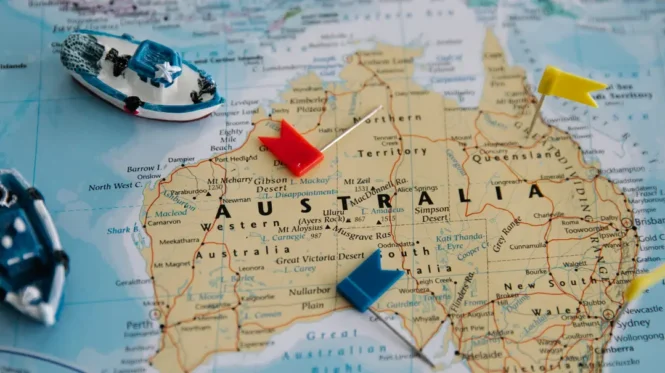
Australia’s Modern Slavery Act turns eight this year, and for most of that time it’s done one thing: generate paperwork. Companies with revenue over A$100 million have had to file an annual statement on modern slavery risk in their supply chains. Nobody checked whether the statement was any good, and nobody was penalised if it wasn’t.
That’s about to change. The Australian government has announced plans to introduce criminal liability for large companies that fail to take reasonable steps to prevent modern slavery in their supply chains. Fines are coming too, though the amounts, along with what actually counts as “reasonable steps,” are still being worked out through consultation.
It’s a genuine shift, not a cosmetic one. A 2023 government-commissioned review of the Act found no hard evidence it had caused meaningful change for people living in modern slavery conditions. Since 2019, more than 27,000 businesses have lodged over 17,000 statements. That’s a lot of reporting and very little proof it moved anything.
Why now
The timing isn’t subtle. Six weeks before this announcement, the US Trade Representative proposed tariffs of up to 12.5% on 60 countries, Australia included, over failures to act on forced labour in supply chains. Countries seen as taking stronger action, including the EU and Indonesia, were pencilled in for a lower 10% rate instead. Australia’s reform lands right before the deadline for showing it’s taken action on forced labour import bans under that same US investigation, and it may be enough to shift Australia into the lower bracket.
Prime Minister Anthony Albanese called the original tariff threat “unjustified,” pointing to Australia’s existing legislation as “robust, comprehensive and world-leading.” The reform announcement suggests the government didn’t entirely believe its own line.
Walk Free’s Founding Director, Grace Forrest, described it as proof Australia is “finally catching up with its global trading partners.” That’s a fair read. The EU has due diligence law with real consequences attached. Reforms are emerging across Indonesia, South Korea and Thailand. Reporting-only regimes are becoming the exception, not the standard.
The gap that’s easy to miss
Criminal liability sounds like the strongest possible lever, and in one sense it is. But it comes with a higher bar of proof than a civil penalty, and criminal charges have to be brought by the state rather than filed directly by anyone affected. If the threshold for conviction ends up too high, or deferred prosecution arrangements are too easy to reach for, the people most affected by exploitation could end up with less practical recourse than a well-designed civil regime would have given them. Forrest flagged exactly this: get the detail wrong, and survivors are the ones who pay for it.
The UK moves too, just not down the same road
Australia isn’t acting alone. On 30 June 2026, the UK government introduced its own amendments to the Modern Slavery Act 2015, tucked into the Immigration and Asylum Bill. The second reading in the House of Commons began on 13 July, and the changes are expected to have a realistic chance of becoming law despite the recent change of prime minister.
The UK’s Modern Slavery Act predates Australia’s by three years and was one of the first pieces of legislation anywhere to require large companies to report on supply chain risk. For a decade it’s stayed exactly that: a reporting duty, with no penalty attached to getting it wrong and no real requirement to say anything of substance. Companies with turnover above £36 million have had to publish an annual statement on the steps taken to keep slavery and trafficking out of their operations and supply chains, or simply state that no steps were taken at all. Either answer satisfied the law.
The proposed amendments change that in three ways:
- Financial penalties, for the first time: Organisations that fail to publish a statement without reasonable excuse could face a penalty of up to the greater of £1 million or 1% of total turnover. Only one penalty applies per statement per year.
- Content is no longer optional: Statements will need to cover, as a mandatory minimum: the organisation’s structure and supply chains; where the risk of slavery or trafficking actually sits within them and what’s being done about it; the due diligence processes in place; training given to staff and, where reasonably possible, to supply chain staff; and an honest assessment of how effective the year’s efforts were. “No steps taken” is no longer a free pass, it now has to come with reasons.
- Personal sign-off: Statements will need board approval and a director’s signature, made after the financial year ends, along with a declaration that the statement is accurate to the best of the signatory’s knowledge. Public authorities above a budget threshold will be brought into scope for the first time too.
The UK is following Australia’s direction of travel, but not its method. Australia is reaching for criminal liability whereas the UK has opted for a civil penalty regime. That’s a meaningfully different lever: easier to enforce, but capped, and without the deterrent weight of a criminal record behind it. Whether a fine of up to 1% of turnover changes boardroom behaviour in the way a criminal charge might is the open question here, in much the same way Forrest’s caution about Australia’s regime applies in reverse to the UK’s.
What this means if you’re sourcing across these markets
If your business already treats modern slavery due diligence as something you actively manage, rather than something you write about once a year, none of this changes your workload. It changes your evidence base. Regulators and customs authorities in multiple markets are moving toward wanting proof, not statements.
If a statement is currently the extent of it, the reasonable-steps standard that Australia is about to write into law is a useful test to run against your own supply chain now, before it’s a legal requirement anywhere you operate.


