
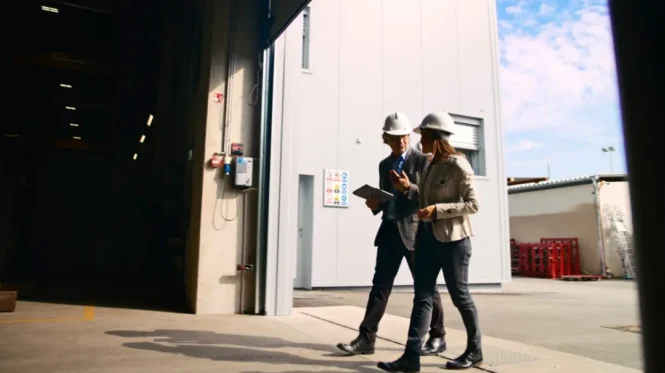
When an auditor arrives at a supplier site, the formal audit may not have started yet. Management has not presented its procedures, the policies are still unopened and worker interviews have not begun, but the auditor is already taking things in.
We recently asked members of the Verisio audit team a simple question: what is the first thing you notice when you arrive at a site?
The answers were varied, but the same themes kept coming up. Our auditors notice the condition of the entrance, how workers arrive, whether the site appears to match the information they were given, how security operates, whether PPE is being used, the standard of housekeeping and whether there are unusual smells or fumes. They also notice the atmosphere on site, including how workers and managers interact before anyone has had the chance to explain what they are seeing.
None of those observations proves that a problem exists, and experienced auditors know that first impressions can be misleading. What they do provide is context, which can help shape the questions that follow and indicate where a closer look may be worthwhile.
First impressions should create questions, not conclusions
Experience changes what you notice.
An auditor who has spent years visiting factories will recognise patterns. A long delay at reception, a production area that does not seem consistent with the information provided, or a site entrance that feels unusually controlled may prompt questions much earlier than they would for someone seeing the operation for the first time.
That experience is useful, but only if it is handled carefully. One of our auditors made the point that previous experience inevitably shapes how you read a site, so the discipline is to stay aware of that and keep coming back to the evidence.
A poorly maintained entrance does not mean working conditions are poor, and a tense-looking worker does not prove there is a problem. In the same way, a polished reception area does not tell you that the rest of the operation is well managed.
The value of a first impression is that it helps the auditor decide what to test next.
Does the site match the operation you were expecting?
Before arriving, an auditor will usually have some information about the site, including what it produces, the size of the workforce and the nature of the operation. The first few minutes can already give a sense of whether that description broadly matches what is in front of them.
Is the level of activity what you would expect for the size of the site? Are workers arriving independently, through company transport or via another arrangement? Is there evidence of production taking place at the scale described? Are there security gates or guards, and are workers subject to checks when entering or leaving?
None of those observations should be treated as a finding in isolation. The point is to notice where something does not quite fit and then understand why.
Sometimes there is a perfectly ordinary explanation. Sometimes there is more to explore.
Housekeeping can tell you something about day-to-day management
Several of our auditors mentioned housekeeping almost immediately.
This is not about whether a factory looks presentable for visitors. It is about what everyday management appears to look like when you first walk through the door.
Clear walkways, waste controls, safe storage and appropriate PPE can all give an early indication of how basic operational disciplines are being managed. Strong chemical smells, fumes, blocked areas or inconsistent use of protective equipment may also point to parts of the site that deserve more attention during the tour.
A tidy factory does not prove that every system is working well, just as a messy area does not tell you everything about employment conditions. What it does give the auditor is context for the rest of the assessment.
If basic controls appear weak in one part of the facility, that may influence which records are reviewed more closely, where more time is spent on the site tour and what is explored during worker interviews.
People often tell you something before they say anything
One of the more interesting themes from our auditors was the atmosphere on site.
Experienced auditors often get a sense of how a workplace feels very quickly, but this has to be handled with care. Cultural norms, personality, language and the presence of an unfamiliar auditor can all affect how people behave, so body language or facial expressions should never be treated as evidence on their own.
What can be useful is noticing patterns in how people interact.
How do managers speak to workers? Does behaviour change when a supervisor enters the room? Do workers appear comfortable moving around the site? Is there a noticeable difference between the atmosphere on the production floor and in the office?
If workers become noticeably quieter when a particular manager approaches, that is not a finding. It may simply mean that worker interviews need to be handled with more care and privacy. That depends heavily on the auditor’s interpersonal skills.
Workers will only speak openly if they trust the person asking. Good auditors explain why they are there and how anything workers say will be used. They also hold interviews away from supervisors. In group interviews, they make sure one confident voice does not speak for everyone and notice who stays quiet. In individual interviews, they take the time to make the conversation feel safe. Most of the skill is in listening.
Even the wait at reception can be worth noticing
One auditor mentioned something that sounds minor but can still be useful: how long it takes before the audit actually begins.
Sometimes a delay is just a delay. The relevant manager may be elsewhere in the building, a meeting may have overrun, or there may be a straightforward operational reason.
Even so, an unexpected wait can make an auditor pay closer attention to what happens next. Has activity changed since they arrived? Are areas being cleaned or reorganised? Have workers been moved? Does the site appear different once the visit formally begins?
The point is not to assume that preparation is taking place. It is to notice the sequence of events and see whether it lines up with the rest of the evidence gathered later.
What you look for depends on the audit
There is no single set of first impressions that applies equally everywhere.
An unannounced verification visit to a smaller manufacturing site may require a different approach from a scheduled SMETA audit at a large facility with established management systems. Geography matters too, because labour models, local regulation, cultural norms and common risk patterns vary from one country to another.
That context helps an auditor know what questions may need more attention, but it should never become a shortcut.
The aim is not to arrive expecting to find a particular issue because of the country, sector or type of site. It is to understand the context well enough to recognise when something deserves a closer look, while remaining open to the possibility that the first impression is wrong.
The audit starts before the checklist
By the time an auditor opens the first document, they may already have noticed several things worth testing.
The site may be smaller than expected. Worker transport may suggest people are travelling much further than the initial information indicated. PPE may be used consistently in one area but not another. The production process may look exactly as described, or something about it may not quite add up.
The skill is not in making a quick judgement about whether the site is good or bad. It is in noticing the small details, staying objective and knowing which observations deserve a question.
That is where experienced auditing adds value, and not only for the client. The feedback we hear most often from sites is that they found the audit useful because our auditors explained what they were checking and why. That helps them put things right and prepares them for the next audit, whoever carries it out. The checklist provides structure, but the auditor still has to understand what is happening around it.
If you need independent supplier audits or onsite verification that looks beyond the documents and tests what is happening in practice, Verisio can support you with experienced auditors, investigations and verification tailored to the questions you need answered.


